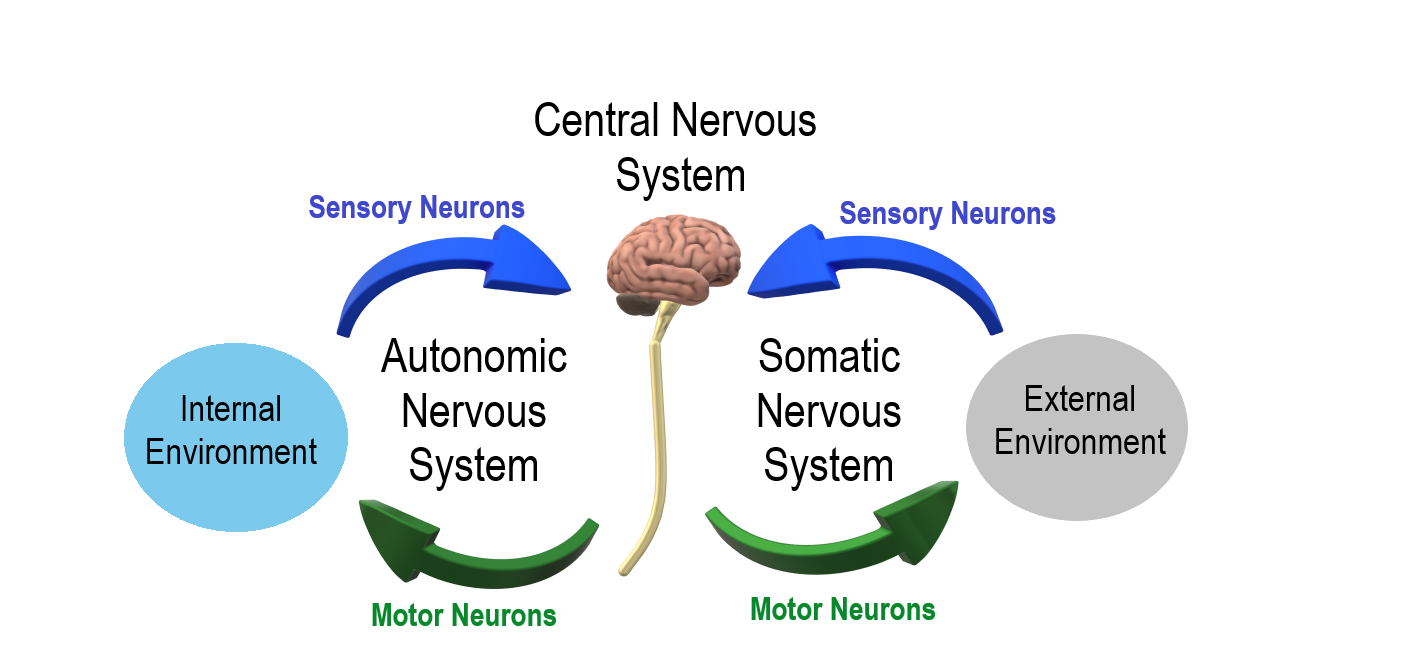
Communication is the primary bottleneck of human progress. For all our technological sophistication, we remain confined to the prehistoric bandwidth of language. We encode complex thoughts into crude symbols—words and gestures—that travel through the air, only to be decoded by another person who interprets them through their own biased filter. This process is prone to distortion, loss of intent, and monumental inefficiency. Direct neural communication promises to dismantle this bottleneck, shifting the paradigm from information exchange to shared cognition.
\n\n
For the leadership elite and those responsible for high-stakes decision-making, this transition represents more than a technological upgrade. It represents the final frontier of operational excellence. When the friction of translation is removed, the speed of alignment within an organization will accelerate by orders of magnitude.
\n\n
The Mechanics of Cognitive Synchronization
\n\n
Direct neural interfaces, such as those being pioneered by Neuralink and similar ventures, function by creating a bridge between biological synapses and digital processing. At its core, this is a hardware-software integration for the human brain. The potential for high-performance thinking lies in the ability to bypass the sensory-motor cortex entirely.
\n\n
Currently, a leader must explain a strategy, hope for comprehension, and wait for feedback. With direct neural communication, the intent, the supporting data, and the emotional context of a strategy could theoretically be transmitted as a cohesive data packet. This is not mere telepathy; it is the democratization of mental models. If a founder possesses an intuitive grasp of a market shift, they could theoretically transmit that structural understanding to their executive team, ensuring total alignment without the degradation of a PowerPoint presentation.
\n\n
Operational Implications for Execution
\n\n
The transition toward neural-linked execution will redefine what it means to manage an enterprise. We are moving toward a future where strategy is no longer a document but a shared mental state.
\n\n
The Compression of Decision Cycles
\n
In traditional hierarchies, information travels upward, is synthesized, and then trickles downward as a directive. This is a high-latency, high-loss system. Neural interfaces could facilitate a flat, high-bandwidth environment where the distinction between individual cognition and collective intelligence blurs. Decision-making will no longer be a series of meetings; it will be a continuous, real-time synthesis of organizational intelligence.
\n\n
The Risk of Cognitive Overload
\n
Efficiency has a ceiling. Increasing the raw throughput of information into the brain does not automatically result in better decisions. If the input exceeds the cognitive capacity to synthesize that data, the system crashes. High-performance leaders must focus on filtration rather than just acquisition. The challenge of the future will be training the mind to handle high-bandwidth streams without sacrificing the ability to think critically and independently.
\n\n
The AI-Human Synthesis
\n\n
Direct neural communication is not an isolated development; it is the natural companion to AI. The true power of artificial intelligence is currently hampered by the interface gap. We ask AI to perform tasks through the slow, clumsy medium of text prompts. A direct neural connection would allow for a symbiotic relationship where the AI acts as an extension of the prefrontal cortex.
\n\n
This integration will allow leaders to offload routine pattern recognition to AI assistants that are directly linked to their cognitive processes. The result is a hybrid intelligence capable of processing vast datasets with the nuance and ethical judgment of a human operator, but at the speed of a machine. This is the ultimate form of operational excellence.
\n\n
The Ethical Imperative
\n\n
As we approach the threshold of direct neural communication, the focus must remain on the preservation of individual agency. A leader who uses neural interfaces to manipulate or suppress dissent is not building a high-performance culture; they are building a prison. The goal of this technology should be to amplify the collective intellect, not to homogenize it. True leadership demands the preservation of the individual’s ability to challenge the consensus, even when that consensus is being broadcast directly into the mind.
\n\n
We are preparing to enter an age where the barrier between thought and action, between individual and group, will be irrevocably thinned. The leaders who succeed will not be those who simply adopt the hardware first, but those who understand how to maintain clarity of purpose in a world where the noise of the collective is amplified by the speed of light.